Mutagent Blog · Problem
AI-Generated Code Is the Majority Now. Who Verifies It?
The median developer now writes 62.5% of their code with AI, and 47% fear AI slop. Here is why verification has to catch up, and how Helix keeps grading separate.
Mutagent Blog · 2026-10-08 · by Benedikt Sanftl
~6 min read

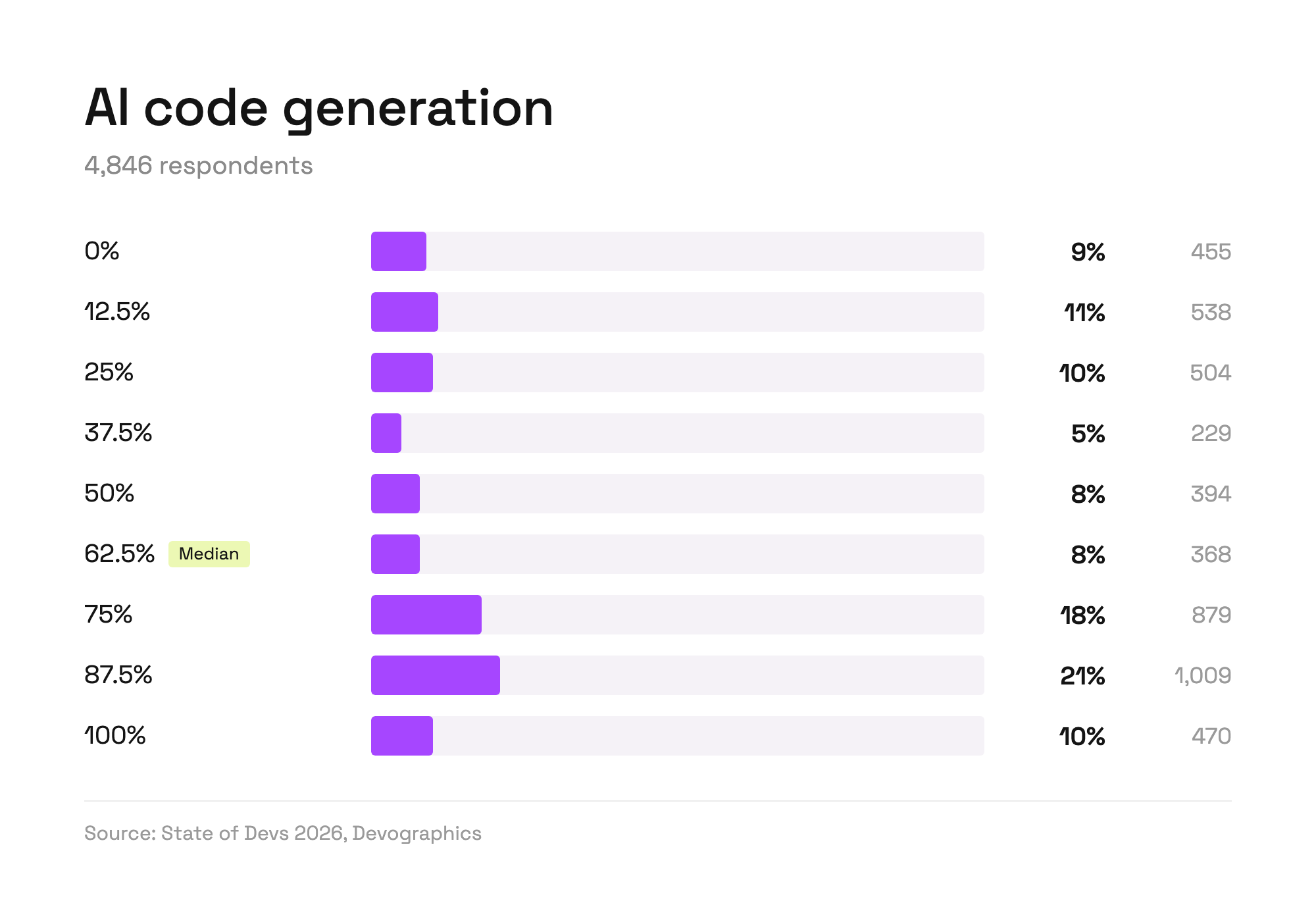
I’ve been building AI agents for about three years, so when the State of Devs 2026 results came out, I went looking for one number. Devographics surveyed 5,463 developers, and 4,846 of them said what share of their code is AI-generated. The median came back at 62.5%.
Then I kept scrolling. The answer people picked most often was 87.5%, chosen by 1,009 developers, and another 470 said every line they produce comes from AI. It’s a survey of developers in general, so I’m reading it as a picture of the whole profession.
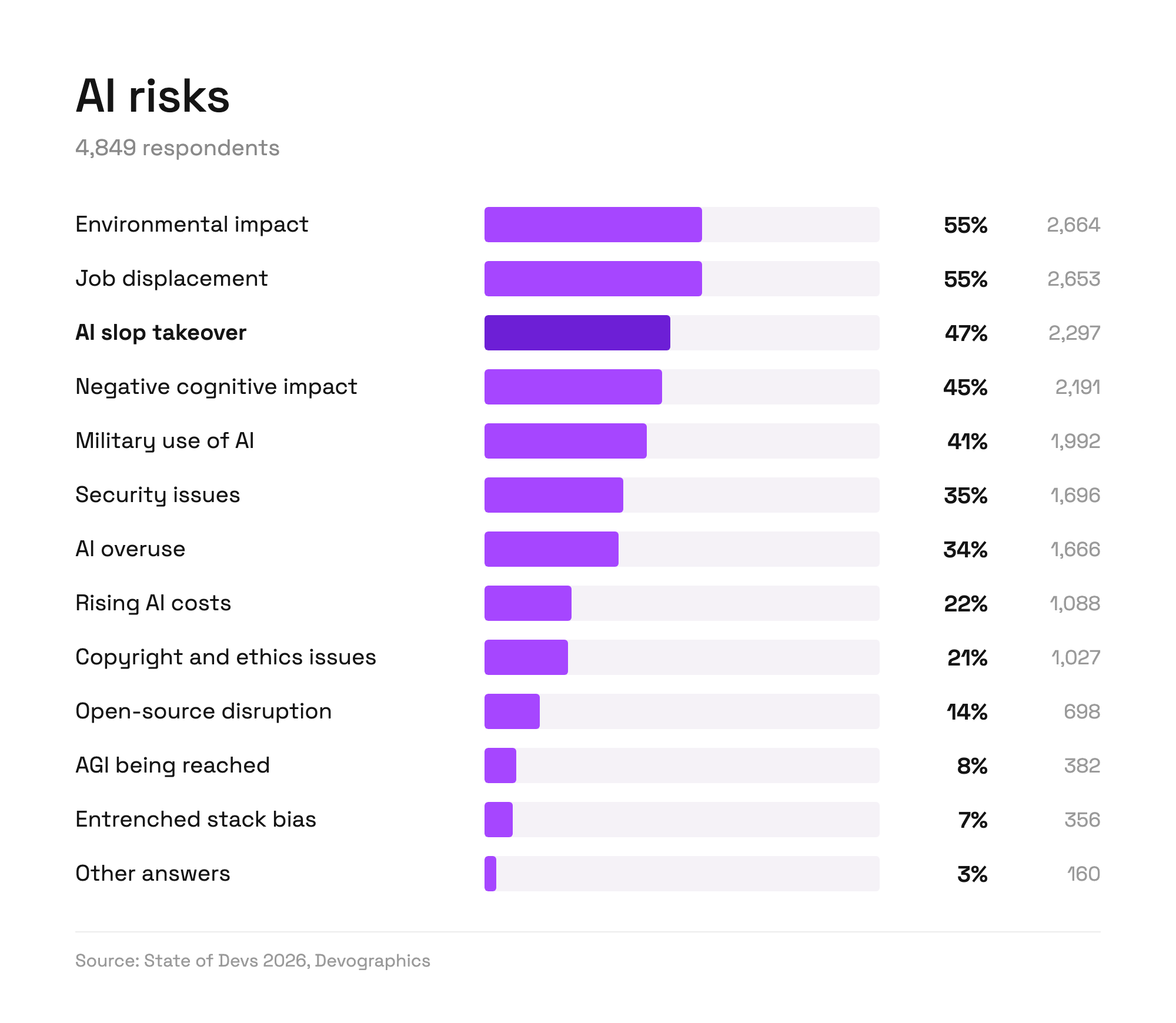
When the same people listed what worries them about AI, “AI slop takeover” came third, picked by 47%. So we have a profession that writes mostly with AI, and nearly half of it is worried the output is junk. To me, those two findings are really one finding.
Who reviews AI-generated code?
I’ve said for a while that the person reading traces is the bottleneck in building agents, and this survey shows the same problem spreading across all of software. Someone still reads the diff. That part hasn’t changed. What changed is that the person reading it usually didn’t write it, and often nobody did, at least in the way we used to mean.
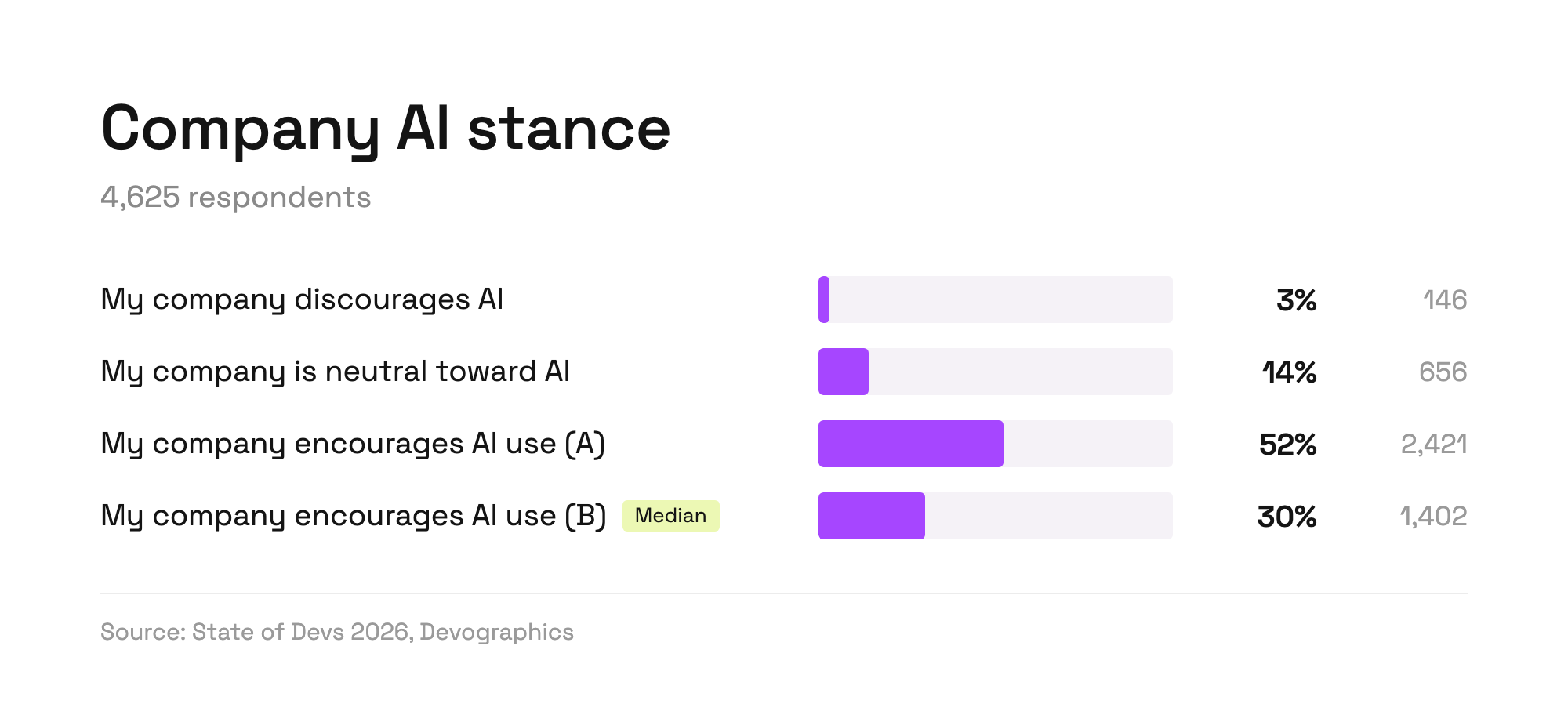
The volume isn’t all enthusiasm, either. 82% of respondents say their company encourages AI use, and 30% admit they use it more than they would on their own because of that. The report calls out quotas and leaderboards as bad for job happiness, which tells you somebody out there is ranking their engineers on prompting.
Why does AI slop get through?
It gets through because it looks fine. Slop reads like a reasonable answer and turns out to be wrong in a way nobody catches until a user does. You can ask reviewers to be more careful, and that works for about as long as the queue stays short.
The approach that holds up is simple. I think of it as test-driven development for agents. You write down what correct means and check every output against it, automatically, every single time.
Agents make this worse. An agent in production doesn’t wait for review at all. Its answers go straight to users, and nobody on the team reads every run.
Can an AI grade its own work?
It can, and you shouldn’t let it. Give a system a score to chase and it’ll chase the score. Sometimes that means it gets better at the task, and sometimes it means it gets better at looking good. The second kind hides well, because the answer reads fine and the evidence is buried somewhere in the trace.
How we built Helix to check agents
So when we built Helix, we split those two jobs apart, because an agent that does the work shouldn’t be the one reviewing it. The evaluator is a separate judge agent whose only job is to score runs and explain each verdict, while a different agent makes the changes.
Here’s the path a failure takes. It actually starts before anything breaks. You write a spec, which is really just a versioned doc of what the agent is supposed to do, and everything downstream gets checked against it. Helix then reads your production traces to figure out what good looks like for your agent, and from that point every new run gets a pass or a fail. When a run fails, Helix goes back into the trace and finds the exact step where it went sideways. Then it ranks the fixes, each tied to the step it would change.
Optimization applies the chosen fix only to the layer diagnosis named and replays it against every run that failed before, so it counts once it passes them. Shipping and rollbacks go through your team’s approval.
All of it runs as one binary on your own machine, on whichever model provider you already use, and your keys stay where they are.
Do developers trust AI?
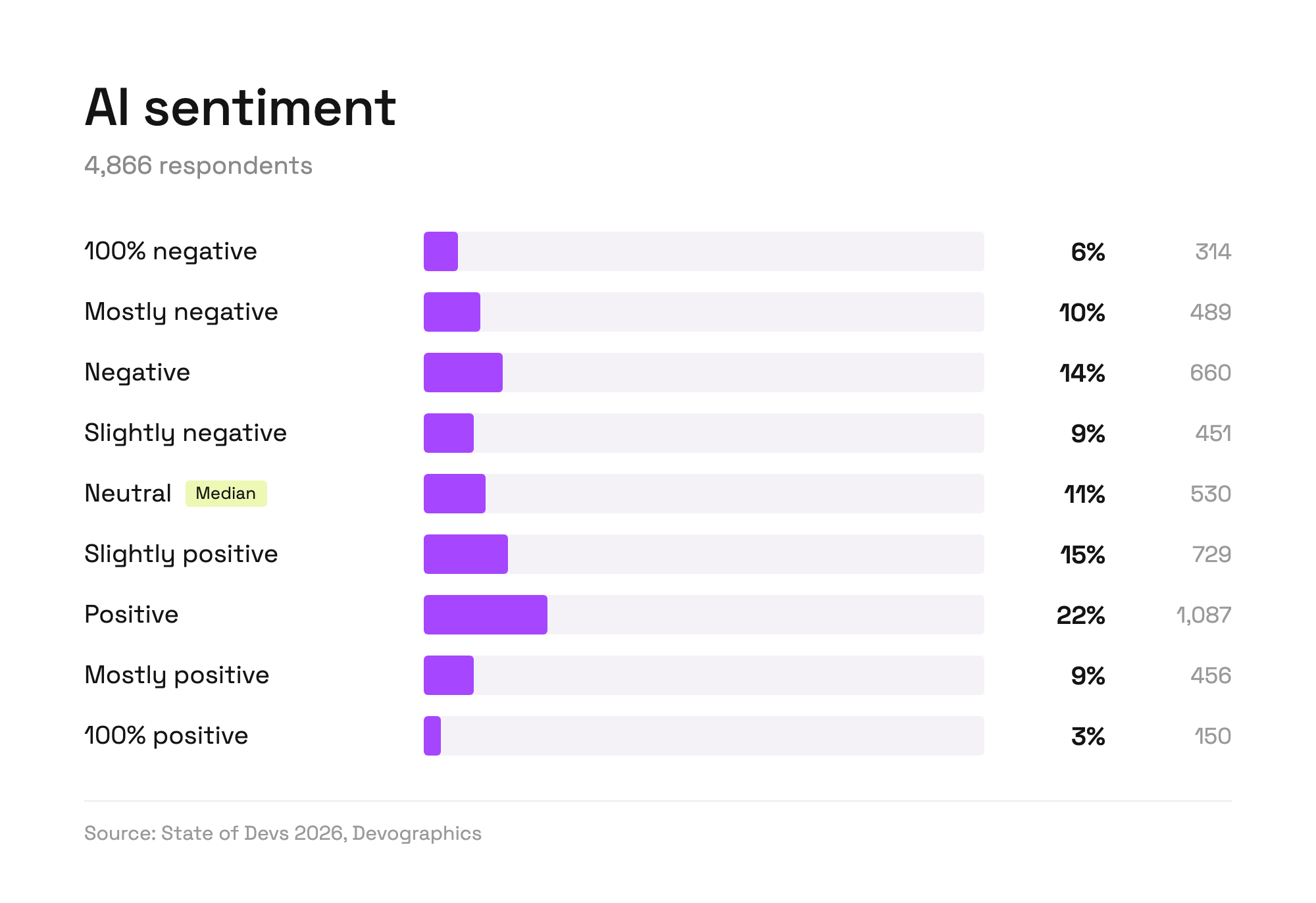
About half of them do. State of Devs found 49% of developers feel positive about AI and 39% feel negative, and 45% disagreed that AI tools have been good for their mental state.
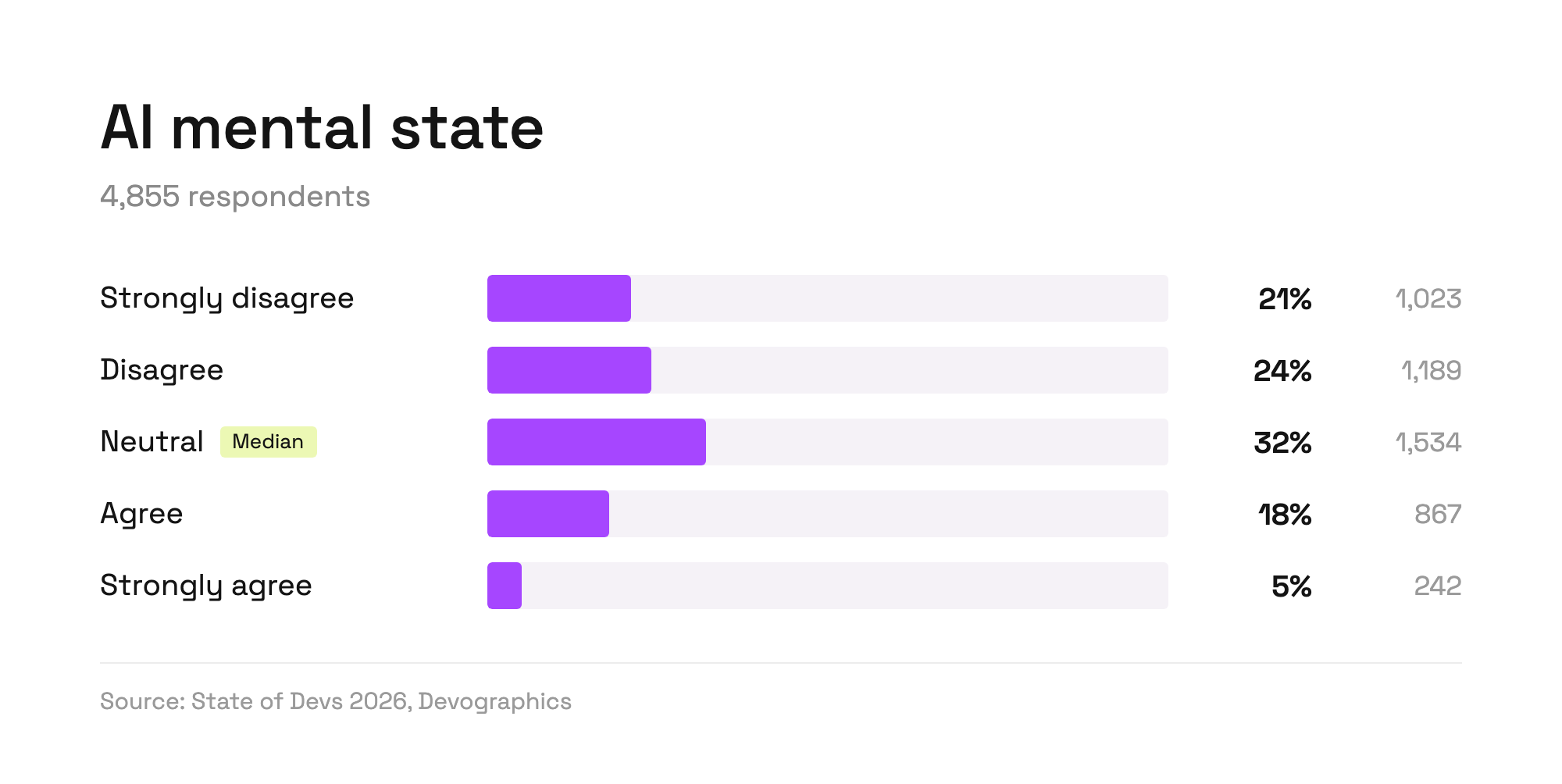
A tool won’t fix how people feel about their industry, and I’m not going to pretend it will. What it can do is swap “I think the agent is fine” for a score you can check on every run, with a person signing off before anything changes. That’s the tedious part I want off engineers’ plates, so they can get back to building the next agent.
Helix is open to everyone, and our launch post walks through how it works: Run the Entire Agent Development Lifecycle with Mutagent Helix.
Survey data from State of Devs 2026 by Devographics.
FAQ
What percentage of code is AI-generated in 2026?
In State of Devs 2026, the median answer among the 4,846 developers who answered was 62.5%. The single most common answer was 87.5%.
What is AI slop?
AI slop is AI output that looks plausible and turns out to be wrong or low quality. 47% of developers in State of Devs 2026 named “AI slop takeover” as a top concern.
How do you verify AI-generated output at scale?
Write down what correct behavior looks like and check every output against it automatically, with a person approving any change. Reading everything by hand breaks down once the volume climbs, and teams running AI agents in production get there quickly.
How do you keep your AI agent’s output slop-free?
Same way you keep code bug-free: tests that run every time, not a reviewer who reads when they have time. Helix writes those checks from your production traces and has a separate judge agent score every run, with its reasoning attached. A failure comes back with the step that broke and a fix, and the fix gets replayed against every earlier failure before your team ships it.